I am a Senior Association Manager at our association management company (AMC) and work as the Executive Director (ED) for multiple clients. One thing I know for sure is that, regularly, the Chair of each Board changes every year or every second year. When you have multiple Boards, creating a system is important to ensure you work well together. Over the years, I have learned that working effectively with new Board leaders takes some time & effort.
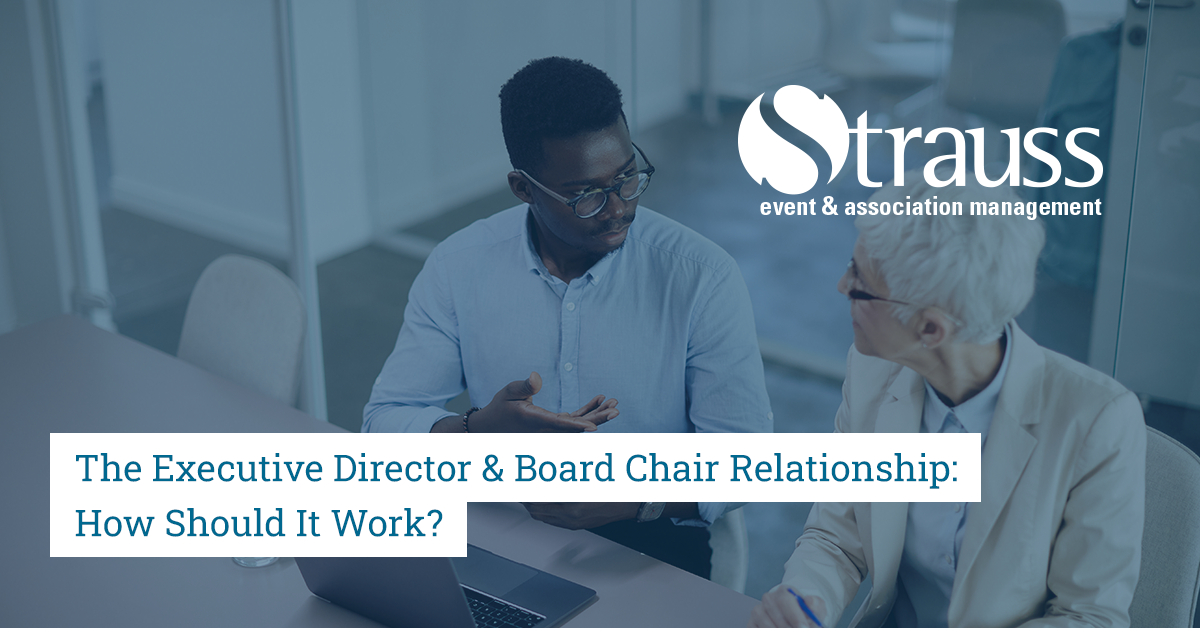
The most effective ED/Chair relationship is built intentionally, not left to personality or chance. The ED and Board Chair function as partners with distinct but complementary roles: the Chair leads the Board, while the ED leads the organization.
What are our Roles?
Not all board chairs are created equal, so it is important to determine who is responsible for what. A useful exercise is to answer the following questions jointly:
- • What decisions belong to the Board?
- • What decisions belong to the ED?
- • Which decisions require consultation between both parties?
- • How will disagreements be handled?
Many associations create a simple “roles and responsibilities” document for board chairs, board members and staff that outlines:
- • Strategic leadership (shared)
- • Governance (Chair/Board)
- • Organizational operations (ED)
- • ED performance management (Board/Chair)
- • Board support and information (ED)
You can clarify roles during an annual board orientation session. One of my previous blogs sheds some light on the value of board orientation. Schedule Regular One-on-Ones
The Chair and ED should meet consistently, often weekly or bi-weekly. The meeting can cover past board meeting action items, strategic priorities, feedback on board meeting effectiveness, emerging issues & risks, and upcoming board agenda items.
Establish Shared Expectations
We are all unique, and we all have preferred ways of communicating with one another. Early in the relationship, it helps to determine your preferred method of communication, how quickly you can expect a response, what information you need to make decisions and move things forward, and how open and honest your dialogue can be to be effective.
Learn Board Governance Together
The ED comes to the table with experience in board governance and can share what they know or take the approach of learning how to work together. Canadian Society of Association Executives (CSAE) provides a training program designed to educate the ED & Chair on how to work through leading the organization. Learning from the same governance framework creates a common language and understanding.
Build Trust Before Problems Occur
Strong Chair-ED partnerships spend time discussing their leadership styles, personal strengths and weaknesses, and long-term goals. Trust developed during calm periods allows the relationship to withstand crises.
I have a previous blog that talks about developing trust between the CEO, Chair, and board members.
The Best Mindset
A simple principle that came from typing this topic into Co-Pilot came up with this, and I agree 100%:
The Chair and ED are not boss and employee in the traditional sense. They are governance and management partners with different responsibilities but a shared obligation to advance the mission of the association.
When both focus on role clarity, trust, communication, and shared commitment to the mission, the partnership usually becomes one of the organization’s greatest strengths.